
The project
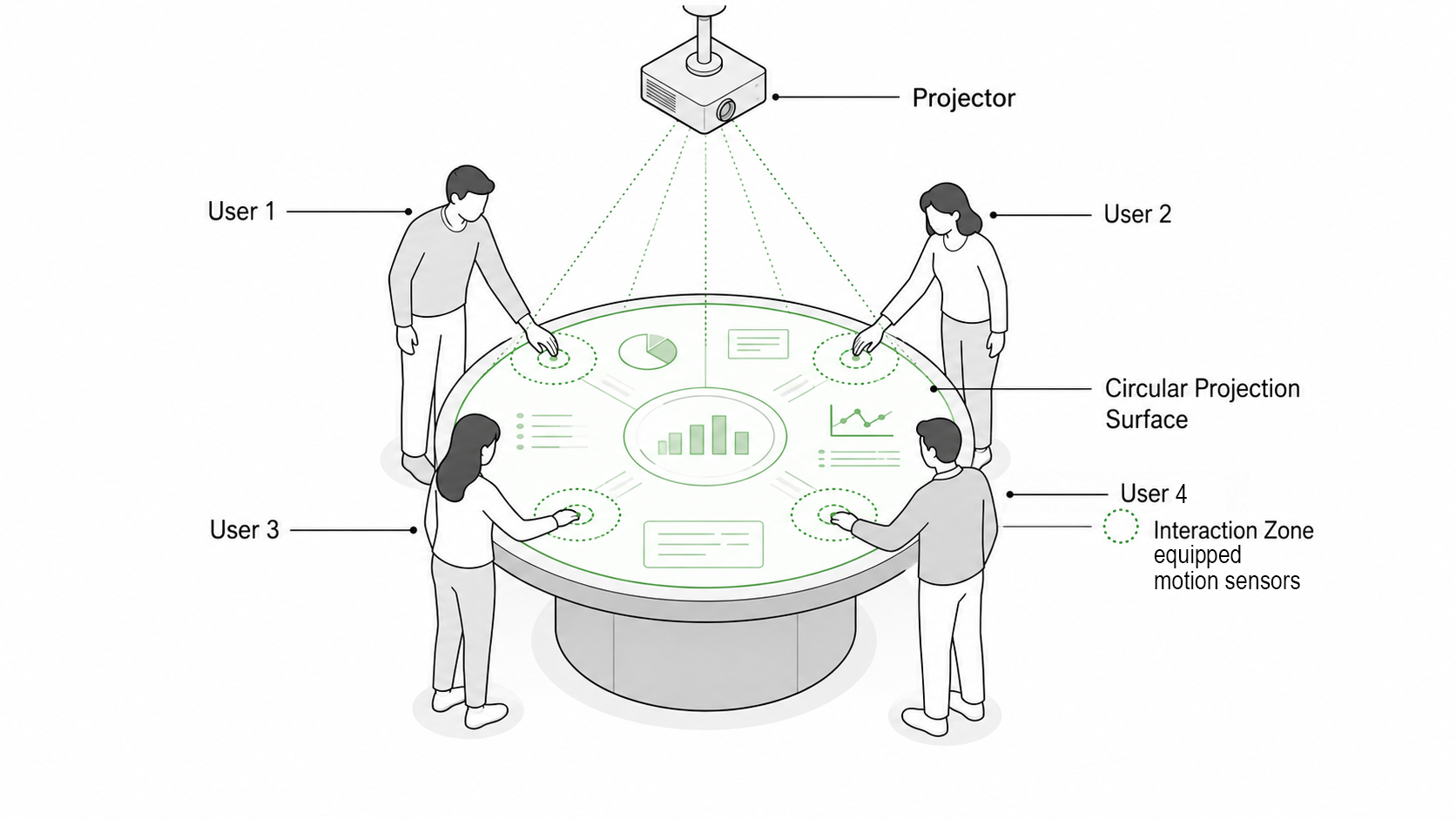
For Expo Agro Argentina 2025, John Deere wanted to showcase the latest technology in its harvesters in a way no one had seen before at the booth: not a screen, but a round interactive projection table, where up to four people at once could touch different areas of the surface and trigger real-time content. I was brought on by Studio Soup, under the creative direction of Juan Codo, to develop the entire visual layer: 3D, motion graphics, and UI design. Programming and the sensor system were handled by a separate team within the same project.
The challenge
The first problem to solve wasn't aesthetic — it was orientation. Four users stand around a round table, each approaching from a different side (top-left, top-right, bottom-left, bottom-right). How do you design content that reads correctly oriented for all four at once, without any of them ending up looking at the "back" of the elements, and without the experience feeling like four separate screens stitched together?
The solution: isometric view
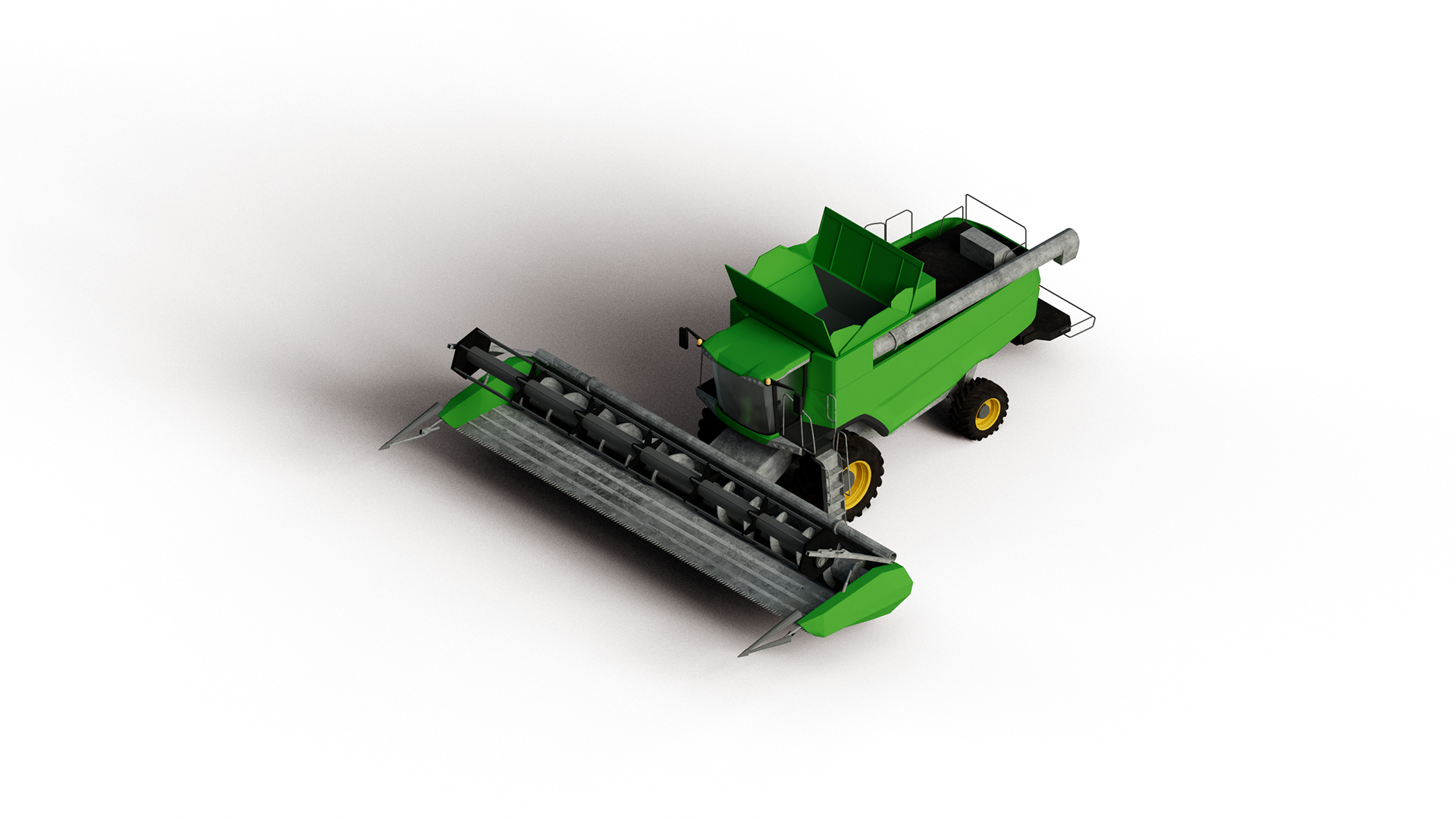
I presented several proposals for how this could work visually, and the one the client chose was an isometric view. Isometry gives the scene volume and depth — making the experience feel more tangible — while also solving the orientation problem: there's no single absolute "up," so all four users perceive the information coherently from their own side, within one unified composition.
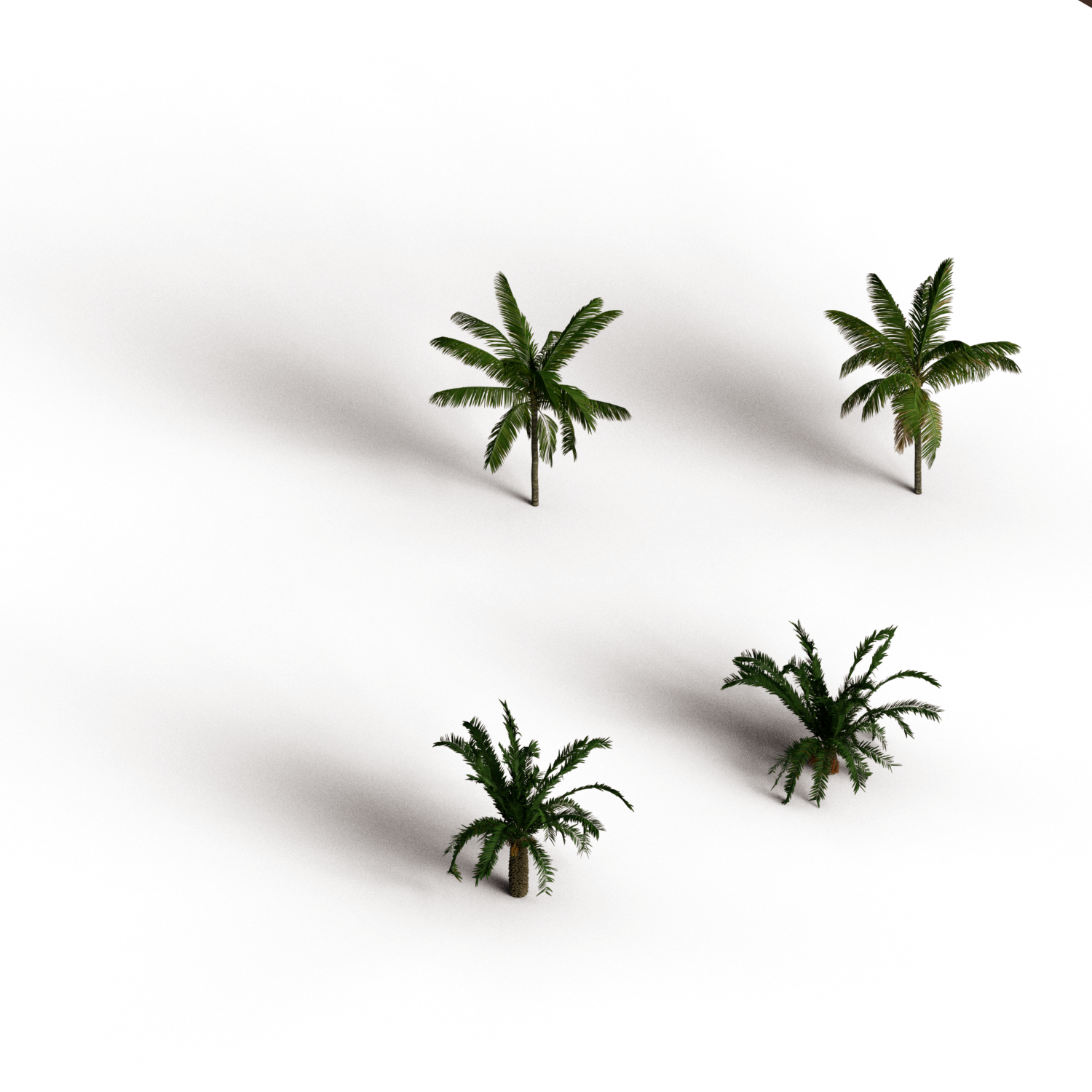
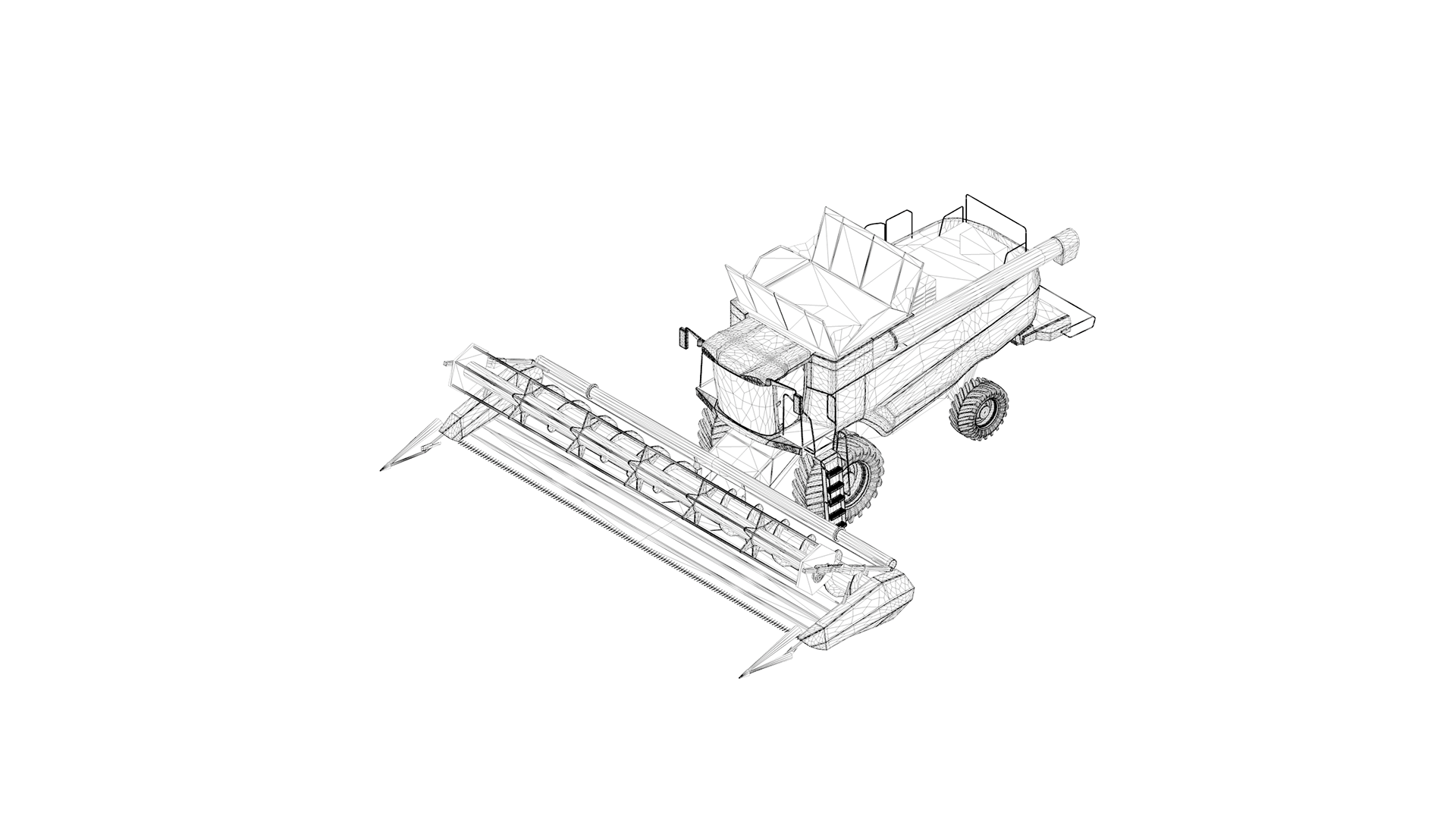
For the first prototype, I set up four harvesters on a planted field as a concept test: I handled rendering and lighting for the harvester models provided by the client, and built a tileable field texture to cover the needed area without visible repetition.

From square to circle: designing for projection
All compositing work was built in After Effects, in square format, knowing in advance that the circular masking would only be applied at the moment of projection onto the physical table. This meant designing and framing every element with an eye toward how it would read once cropped into a circle and viewed from four different angles — a technical constraint that shaped every compositing decision.
UI design and animation
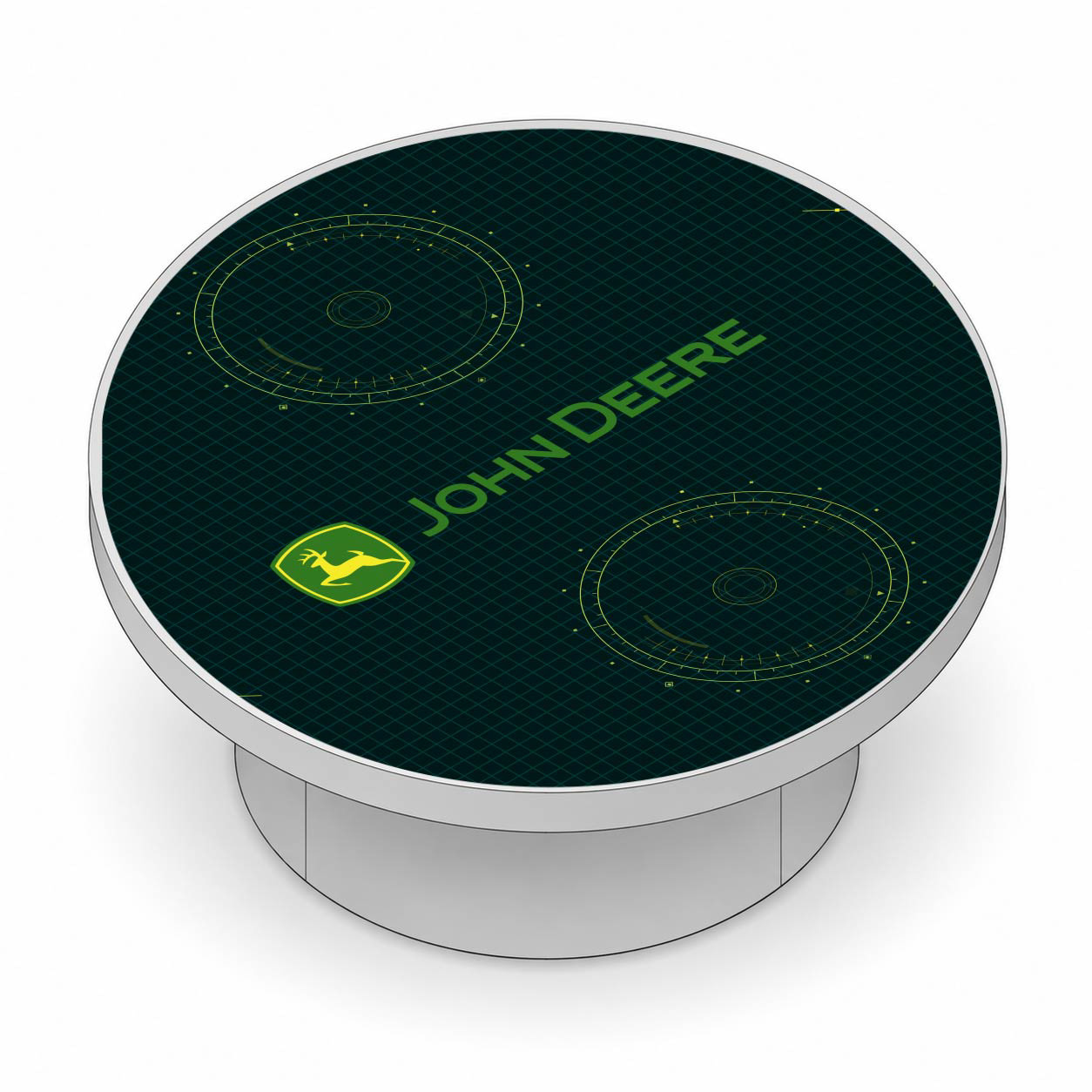
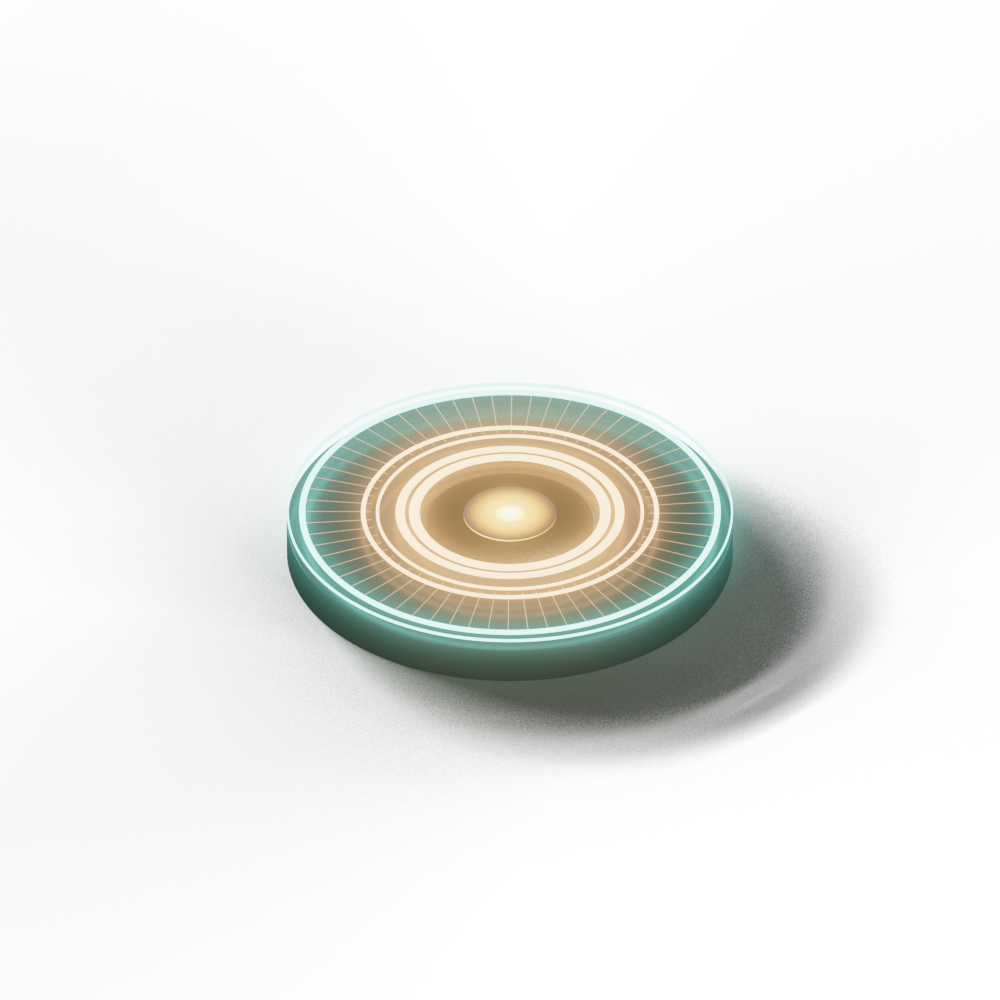
The table uses sensors that detect users' hand movement to activate different interactive zones. I designed and animated the UI elements in After Effects needed to make it fully clear which zones were interactive and which weren't — a critical point on a surface with no physical buttons.
The content itself was technical: the harvesters have satellite connectivity, letting users monitor machine status, soil condition, fertility, and irrigation from their smartphones. For this part, I started from the client's real software UI and adapted it into a simplified, more visually engaging language, designed for an audience encountering the product for the first time at the booth
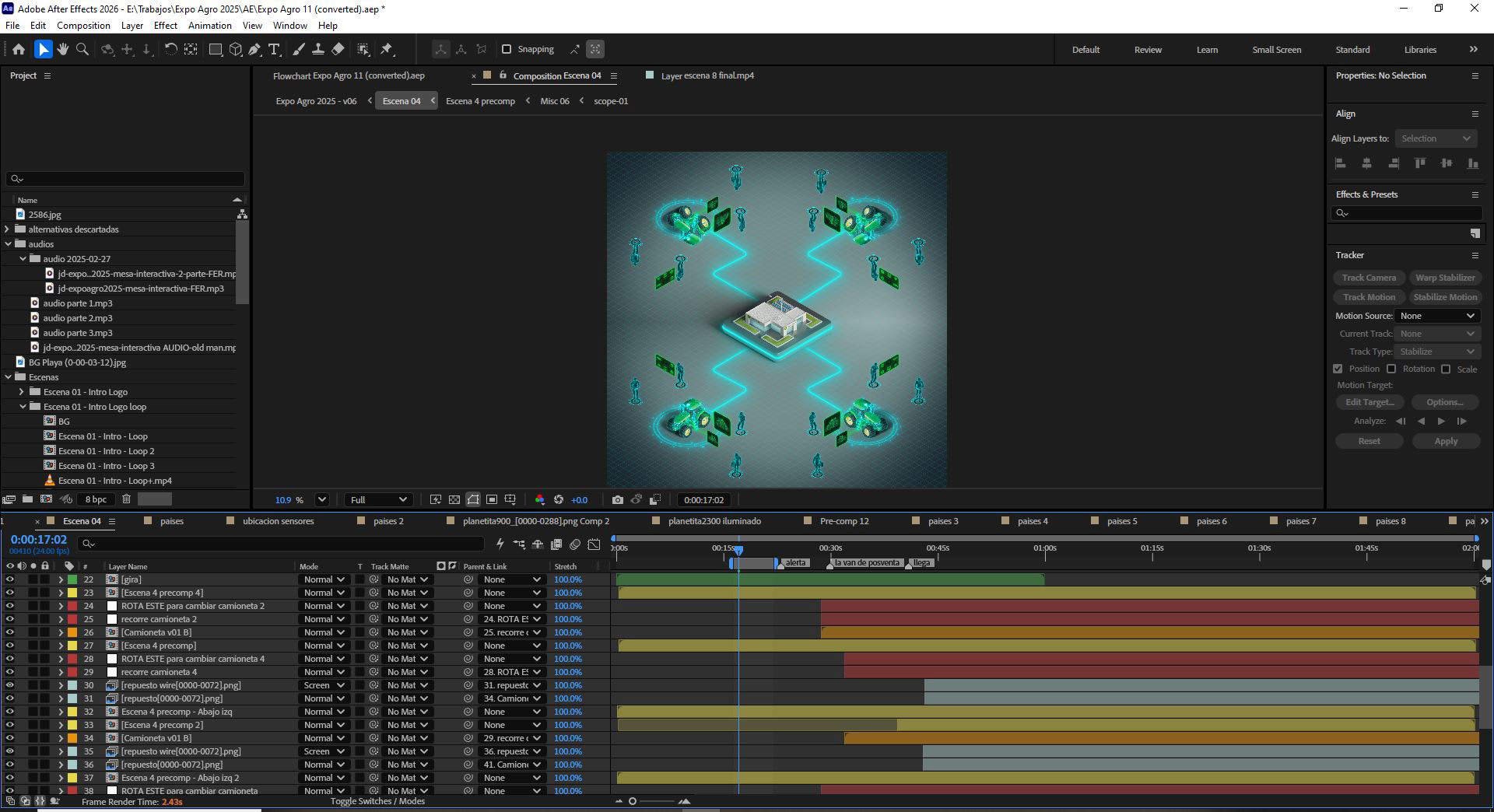
Modular content: multiple interaction instances
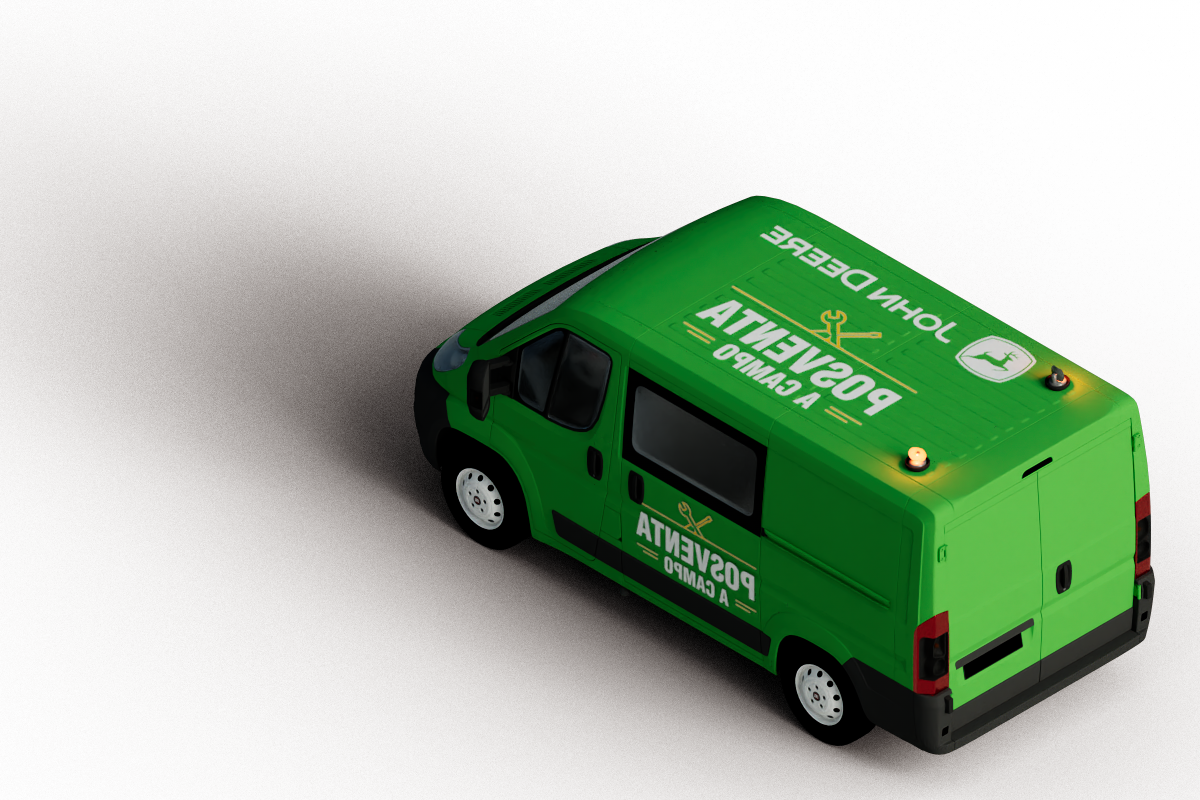
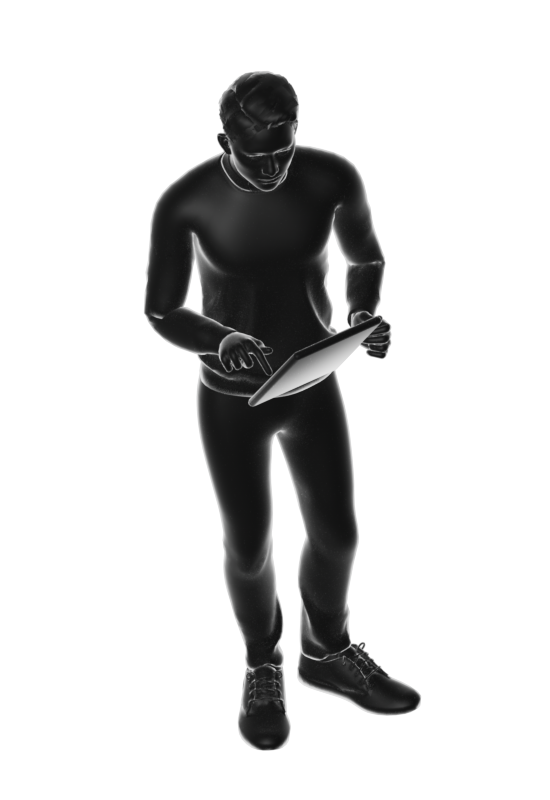
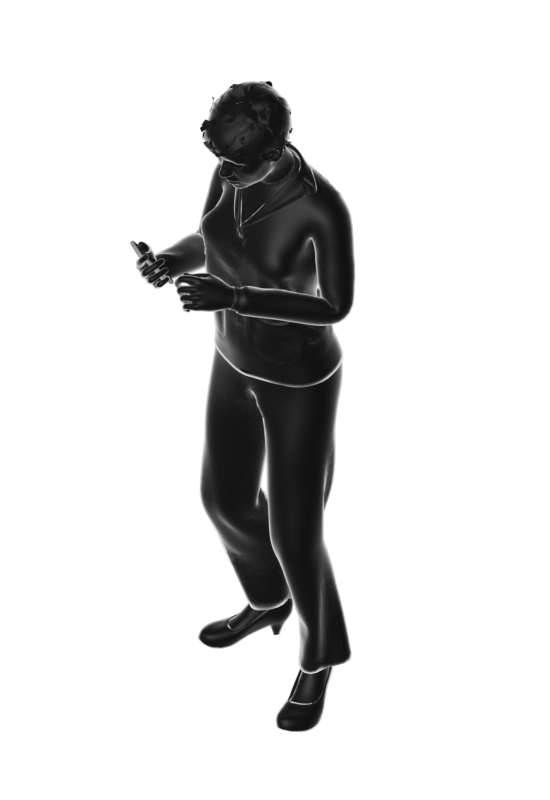
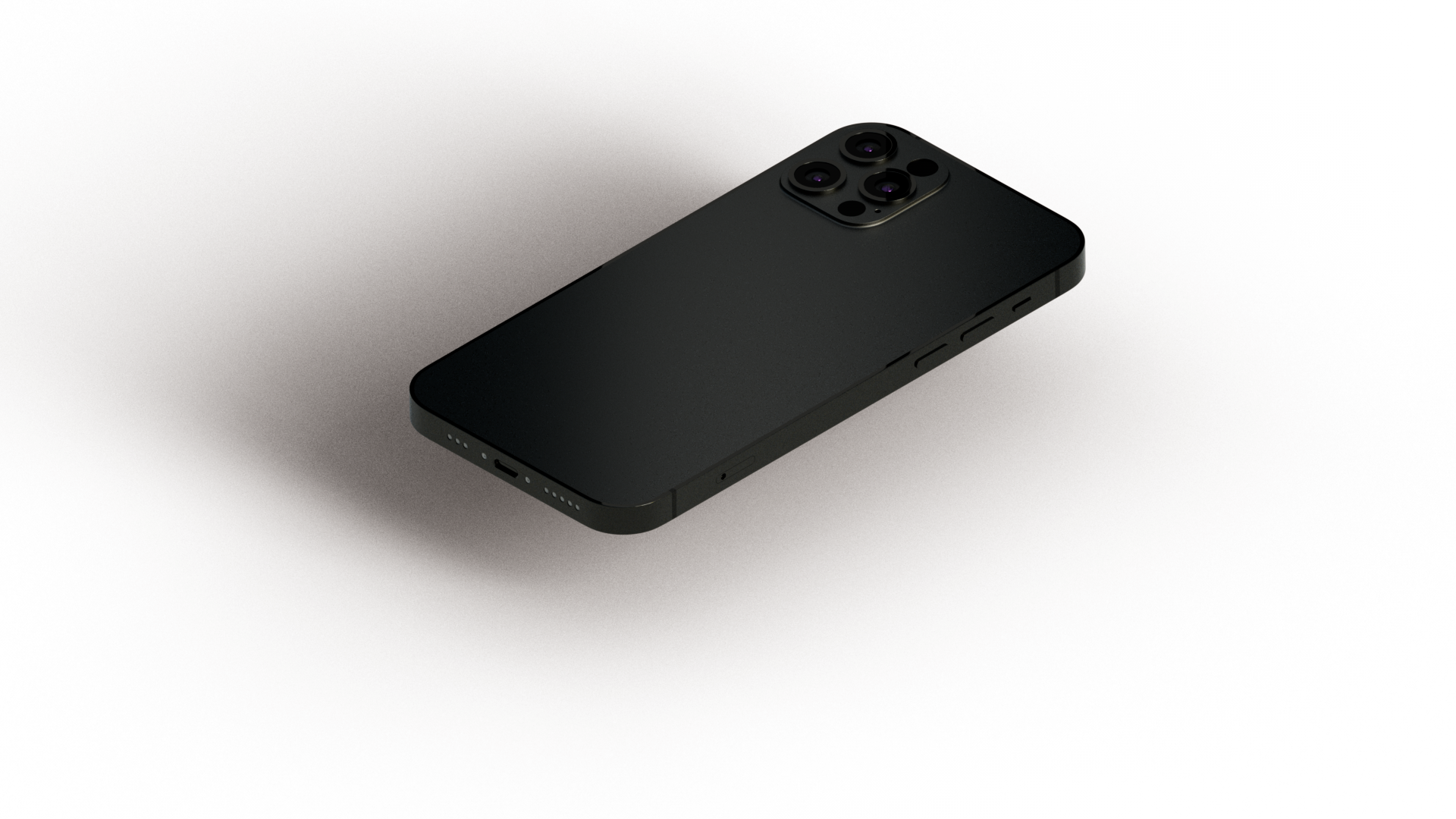
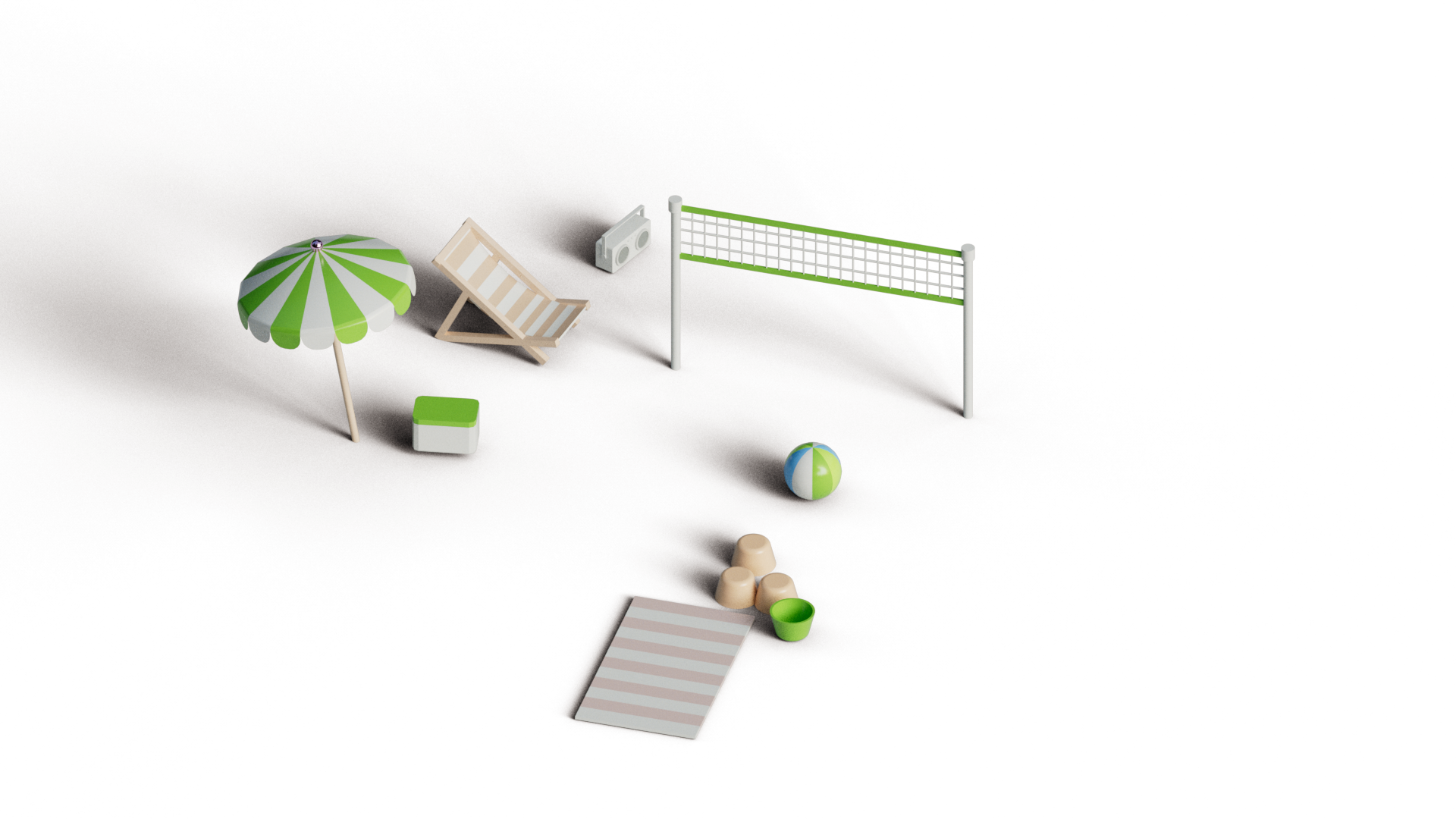
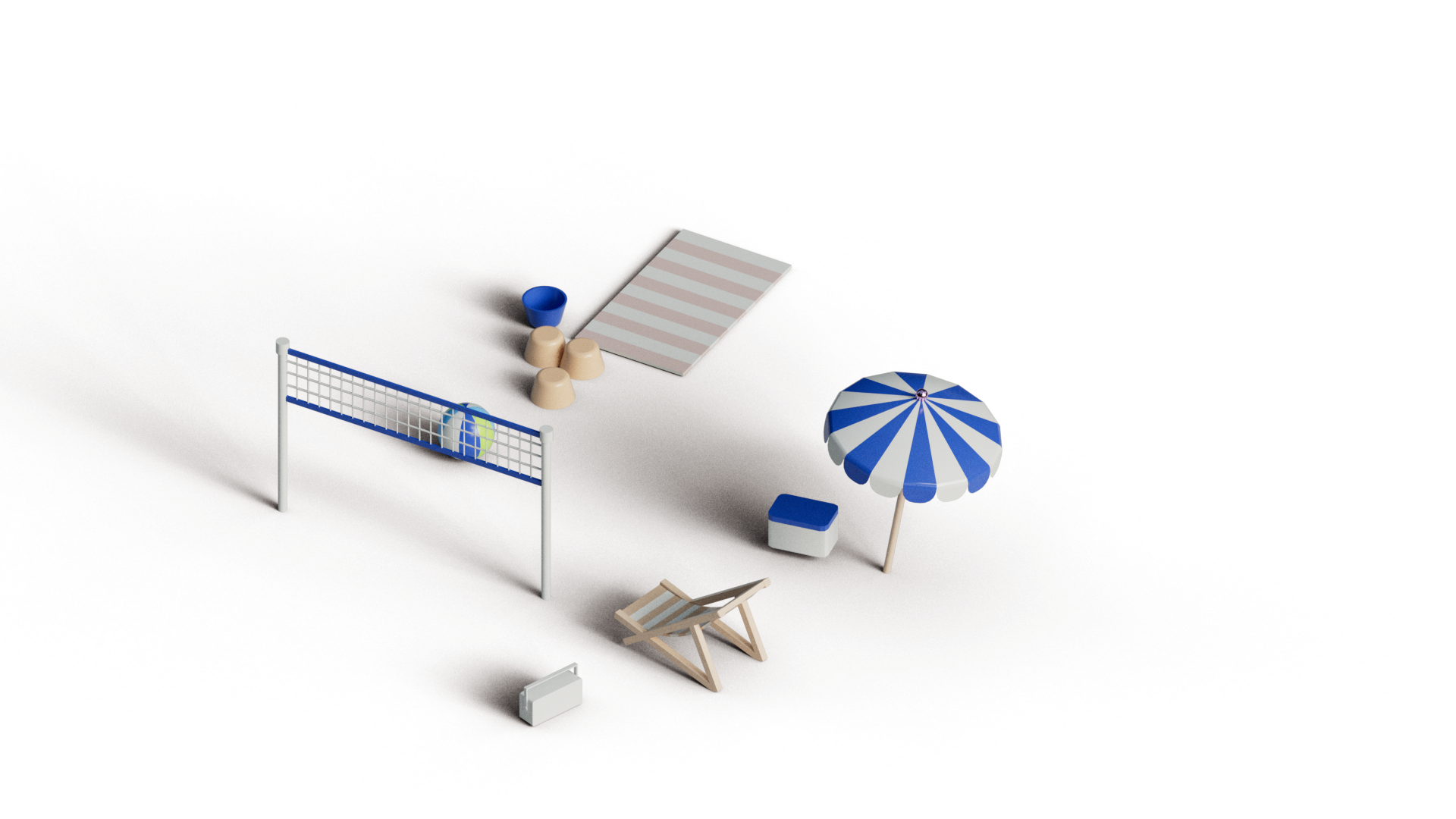
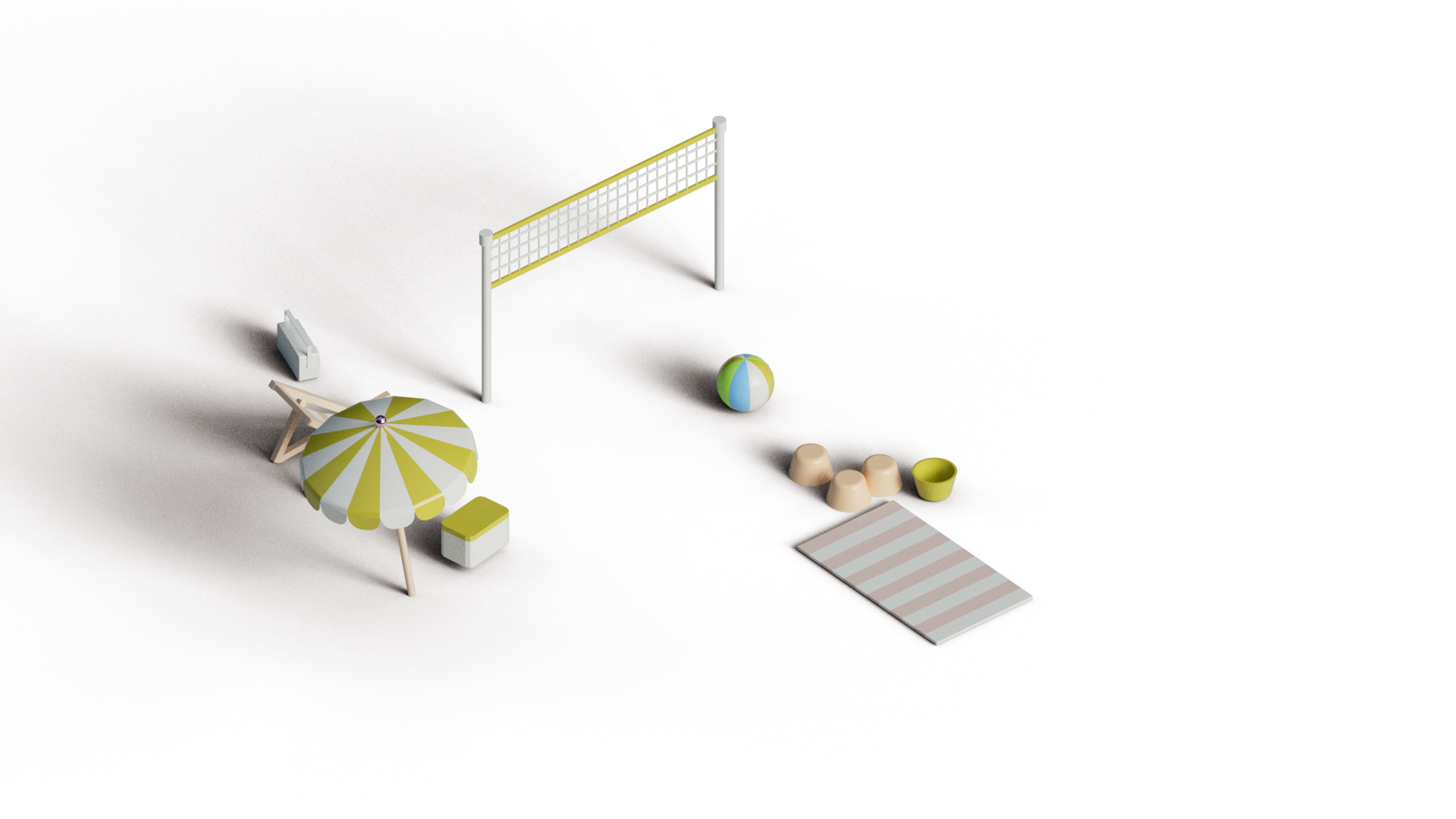
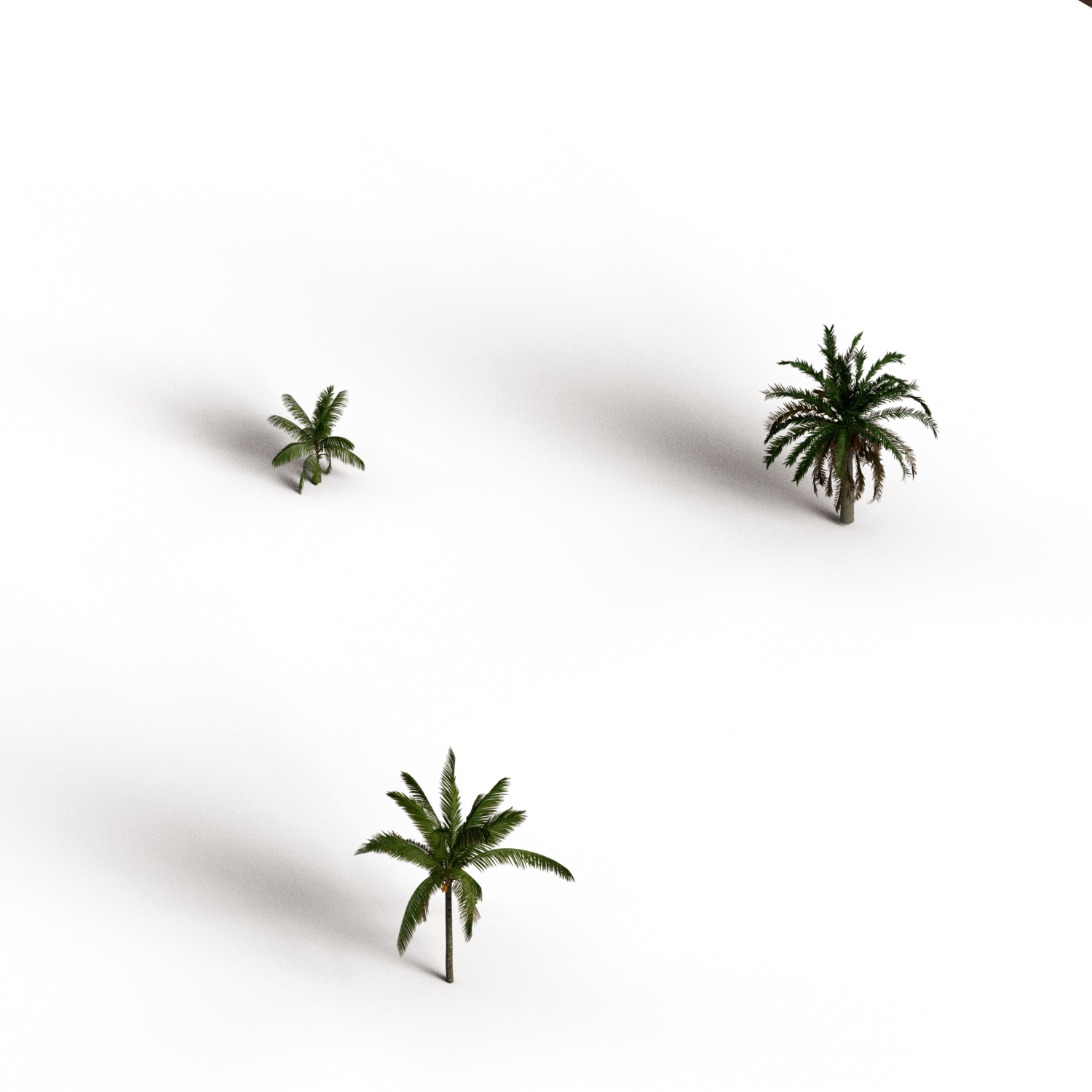
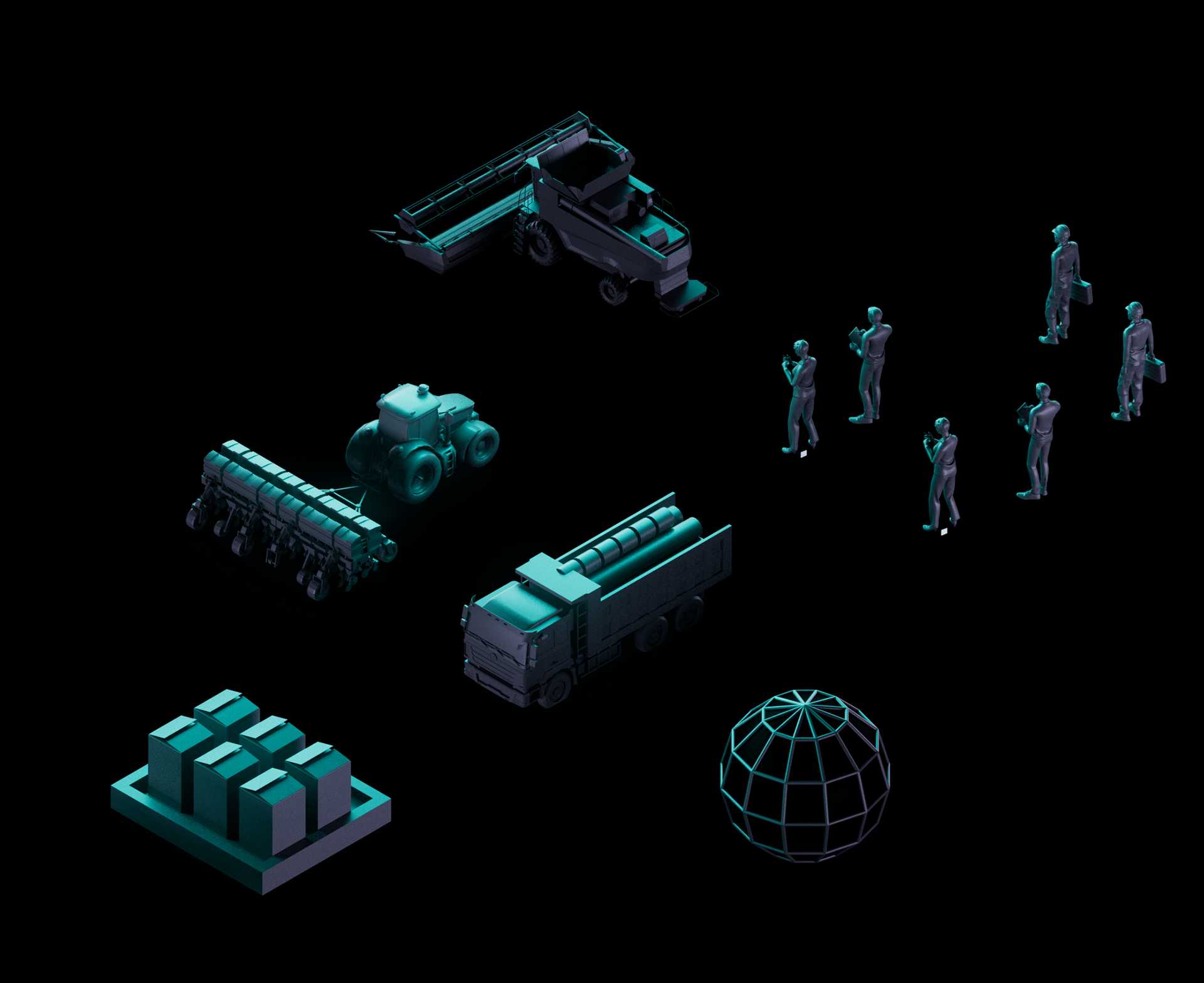
Beyond the harvesters, I modeled and animated other 3D elements — phones, trucks, people — and rendered each one separately. This made it possible to compose different interaction instances depending on what the system needed at any given moment, based on which zone the user clicked. The content wasn't a linear video; it was a library of pieces built to respond to a real-time interactive system.
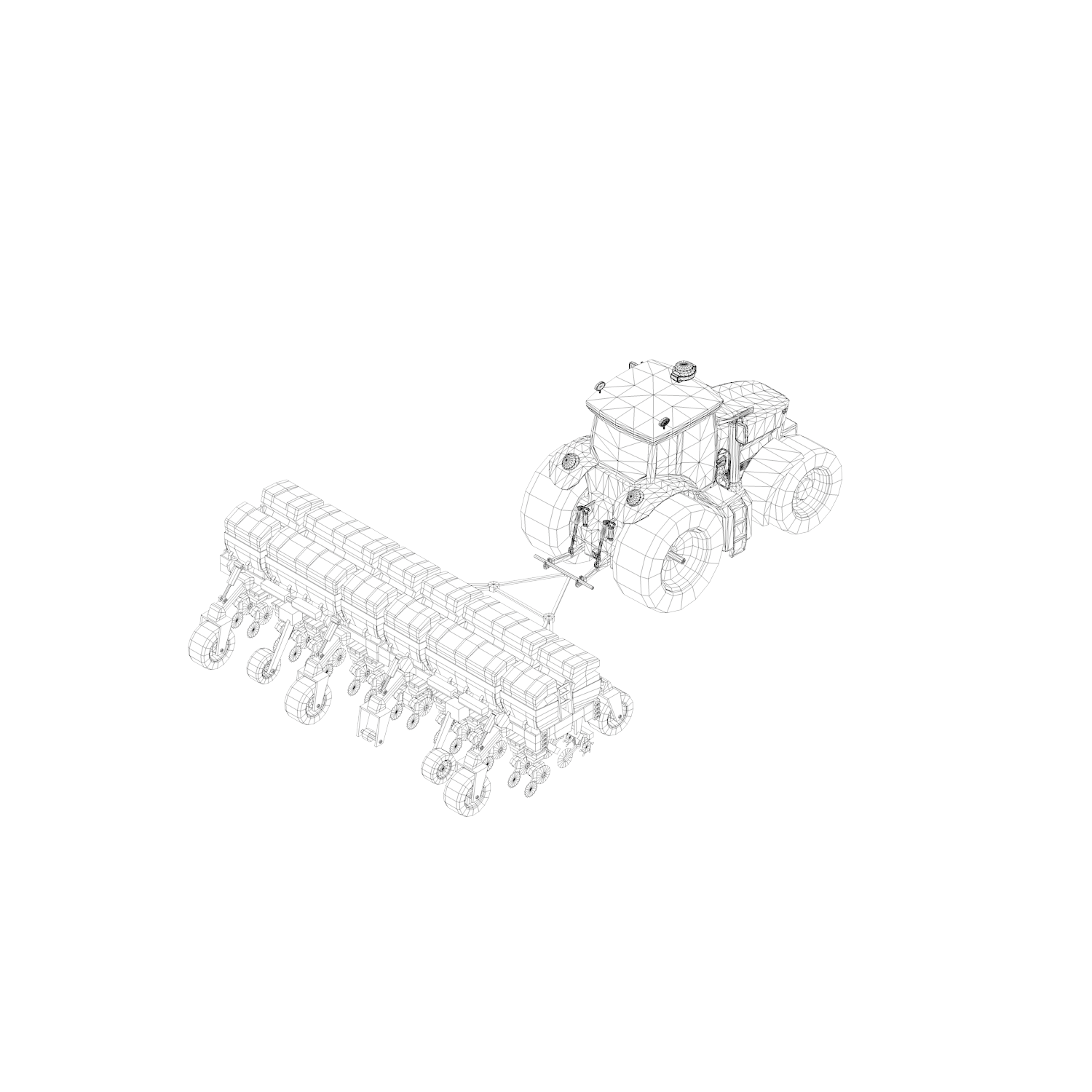
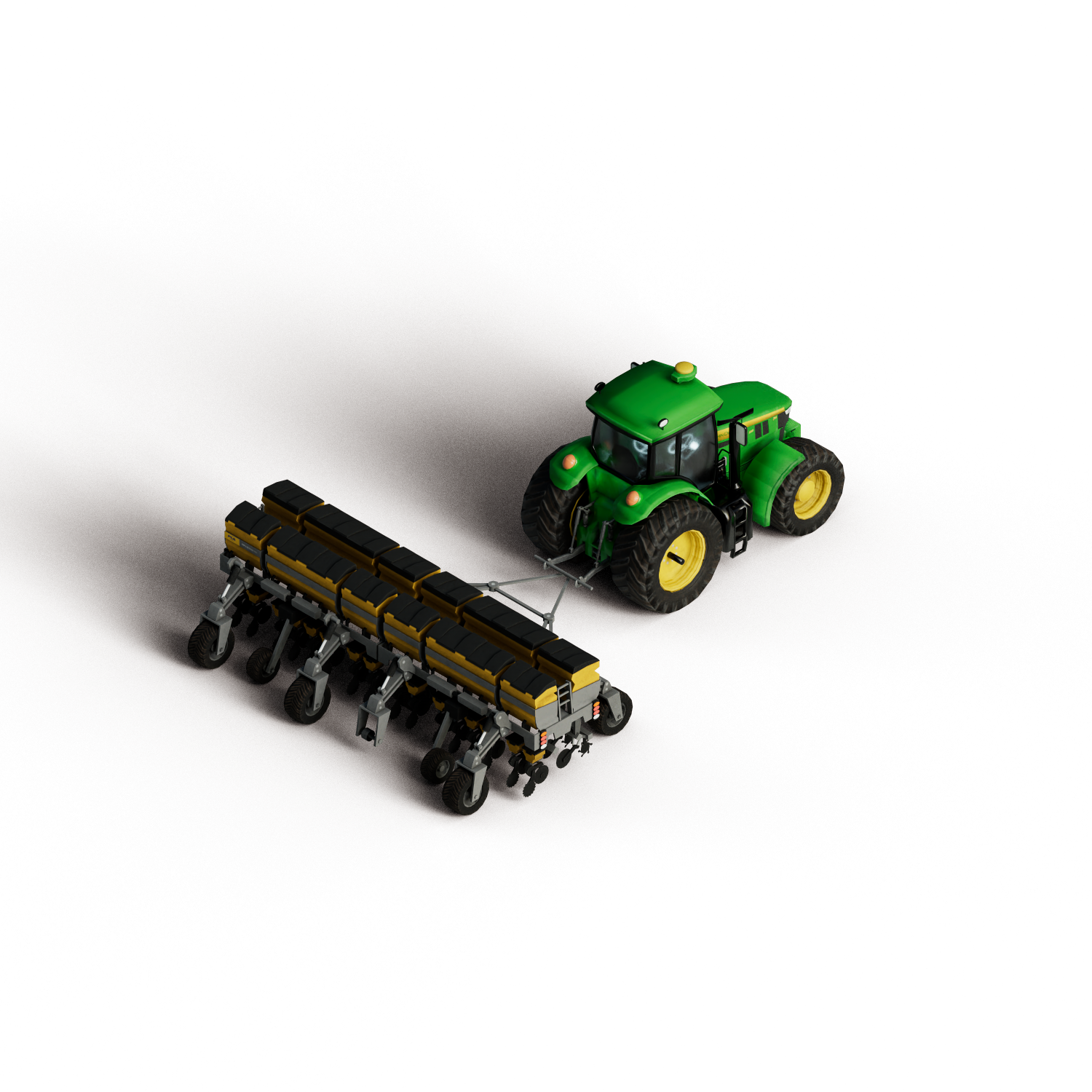
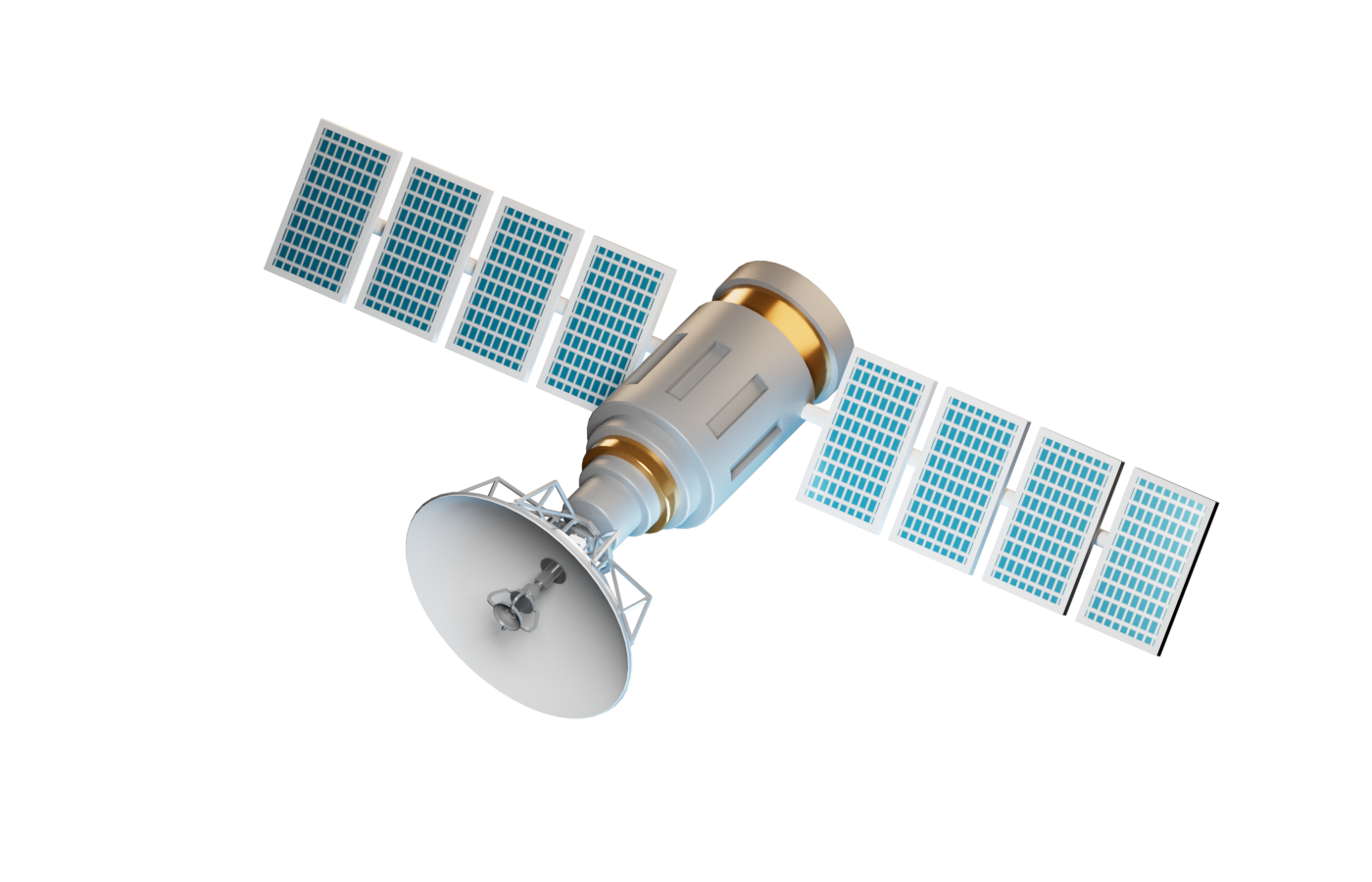






See It All Come Together
Team and collaboration
What I valued most about this project is that it started with an unconventional challenge, well outside the typical motion graphics brief: projecting an interactive experience onto a round surface. It also meant being part of a multidisciplinary team — developers, marketing, creative direction — and combining a high level of practical functionality with aesthetic value, on a project that used cutting-edge technology to showcase cutting-edge technology.
MY ROLE
Compositing: After Effects
3D: Modeling, lighting, and rendering in Cinema 4D
UI/UX visuals: Interface design and animation
Client: John Deere
Event: Expo Agro Argentina 2025
Agency: Studio Soup
Creative Direction: Juan Codo
Motion Graphics, 3D & UI Design: Pablo Kerlleñevich